
Poker Hand Rankings: A Simple Guide for Home Games
If you’re new to poker, learning the hand rankings is one of the most useful things you can do before joining a game. Even experienced players sometimes pause to compare two hands, especially when the board creates several possible combinations.
In standard Texas Hold’em, each player makes the best possible five-card hand using any combination of their two private cards and the five community cards. You may use both private cards, just one, or neither.
The Poker Hands, from Highest to Lowest
- Royal flush: A, K, Q, J and 10, all in the same suit. This is the highest standard poker hand.
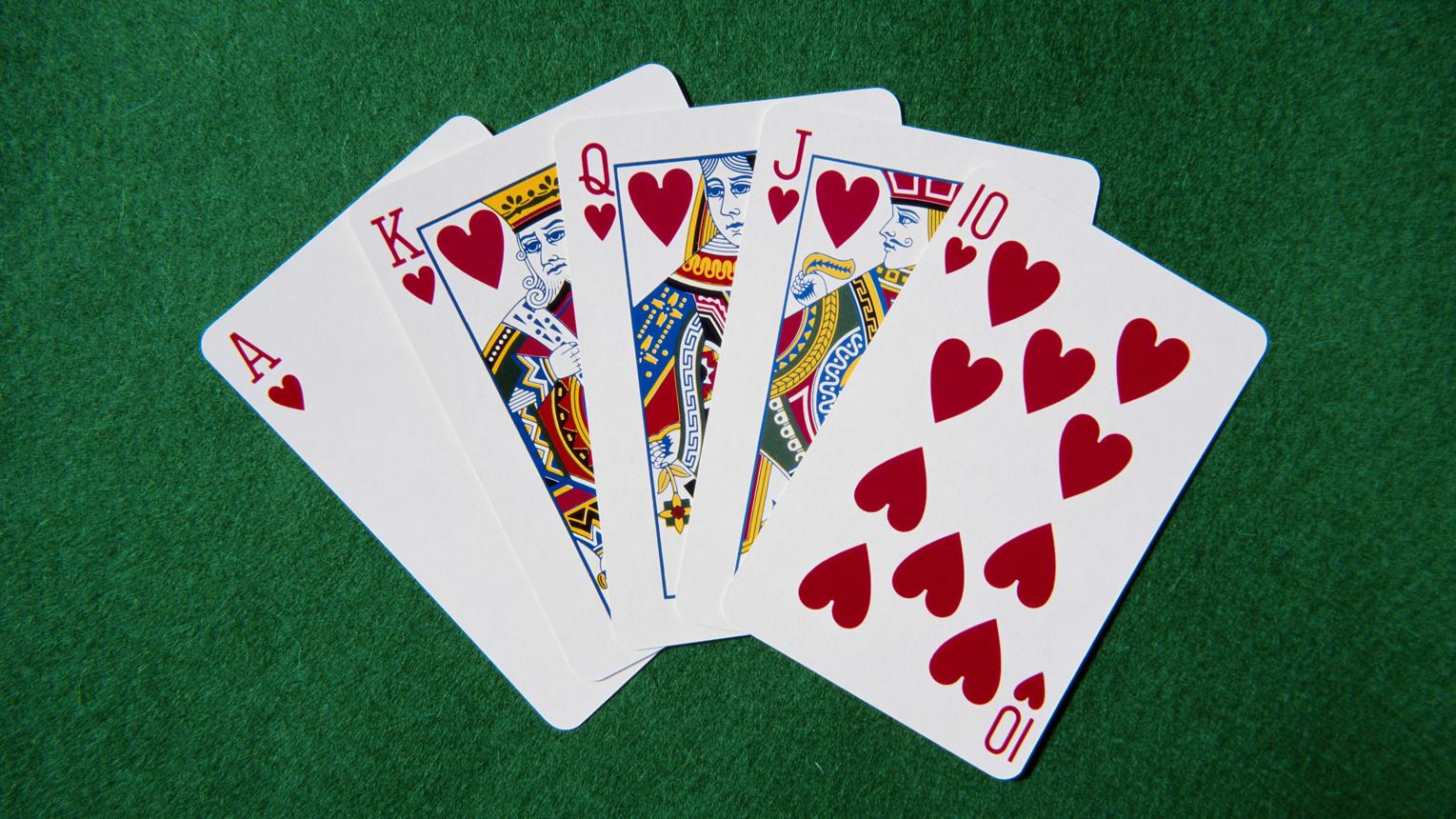
- Straight flush: Five cards in sequence, all in the same suit. A royal flush is an ace-high straight flush.

- Four of a kind: Four cards of the same rank, such as four queens, plus one other card.
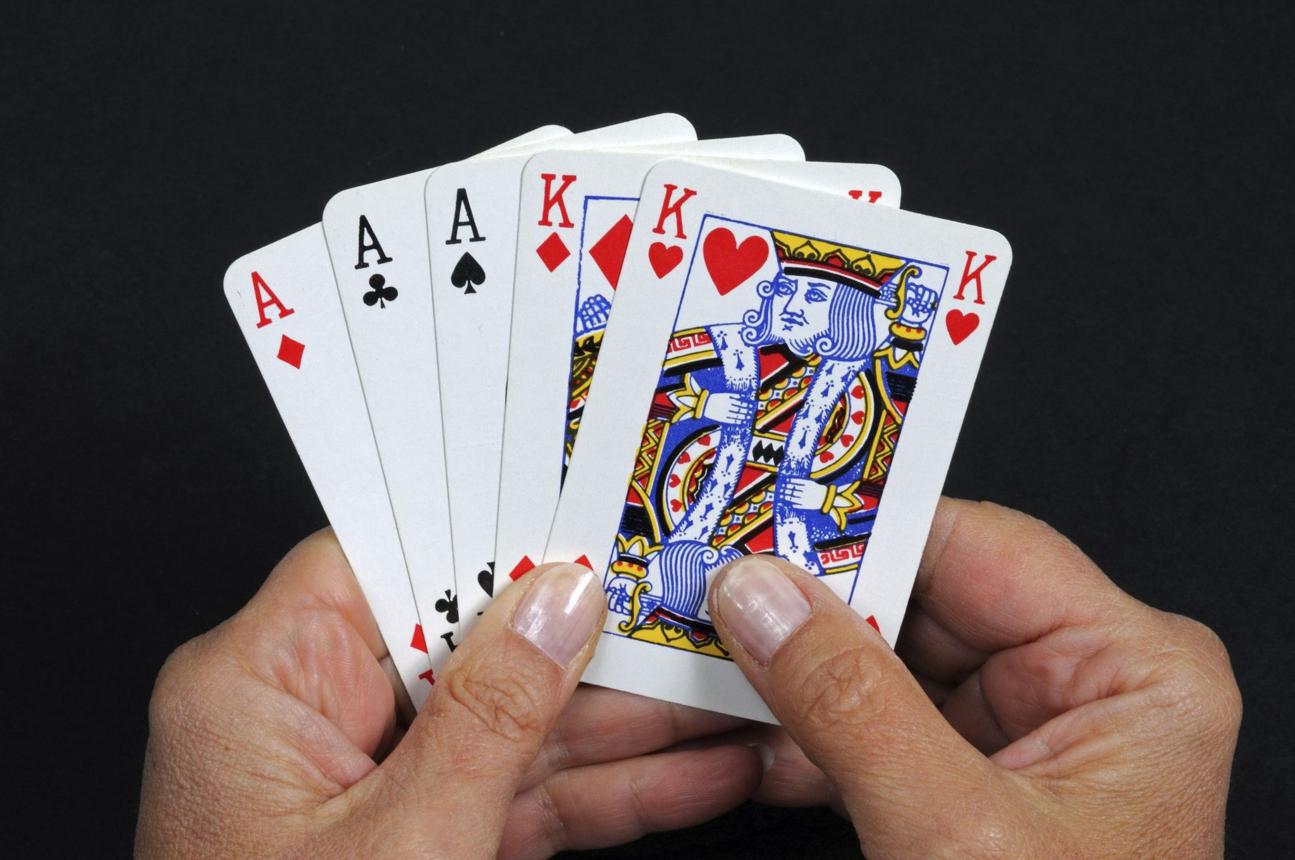
- Full house: Three cards of one rank and two cards of another, such as three 8s and two 4s.
- Flush: Five cards of the same suit that are not all in sequence.

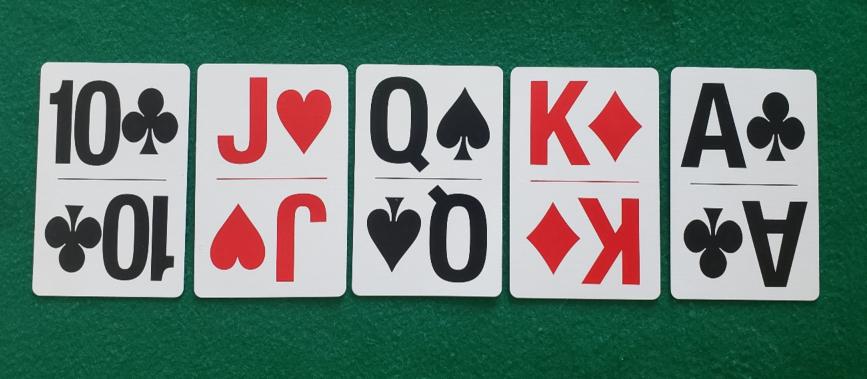
- Straight: Five cards in sequence, regardless of suit. An ace can be high (10-J-Q-K-A) or low (A-2-3-4-5).
- Three of a kind: Three cards of the same rank, with two other cards.
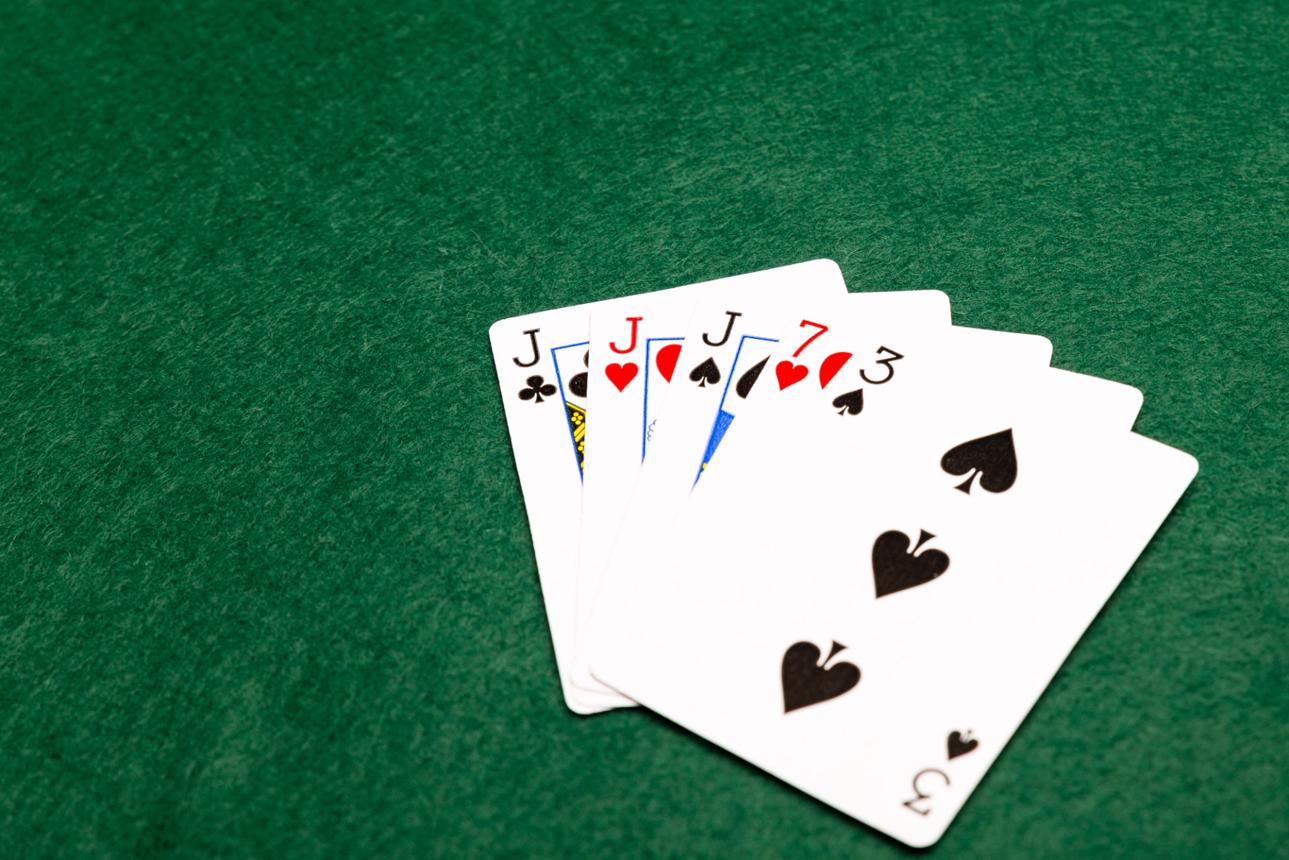
- Two pair: Two cards of one rank, two of another rank, and a fifth card called the kicker.
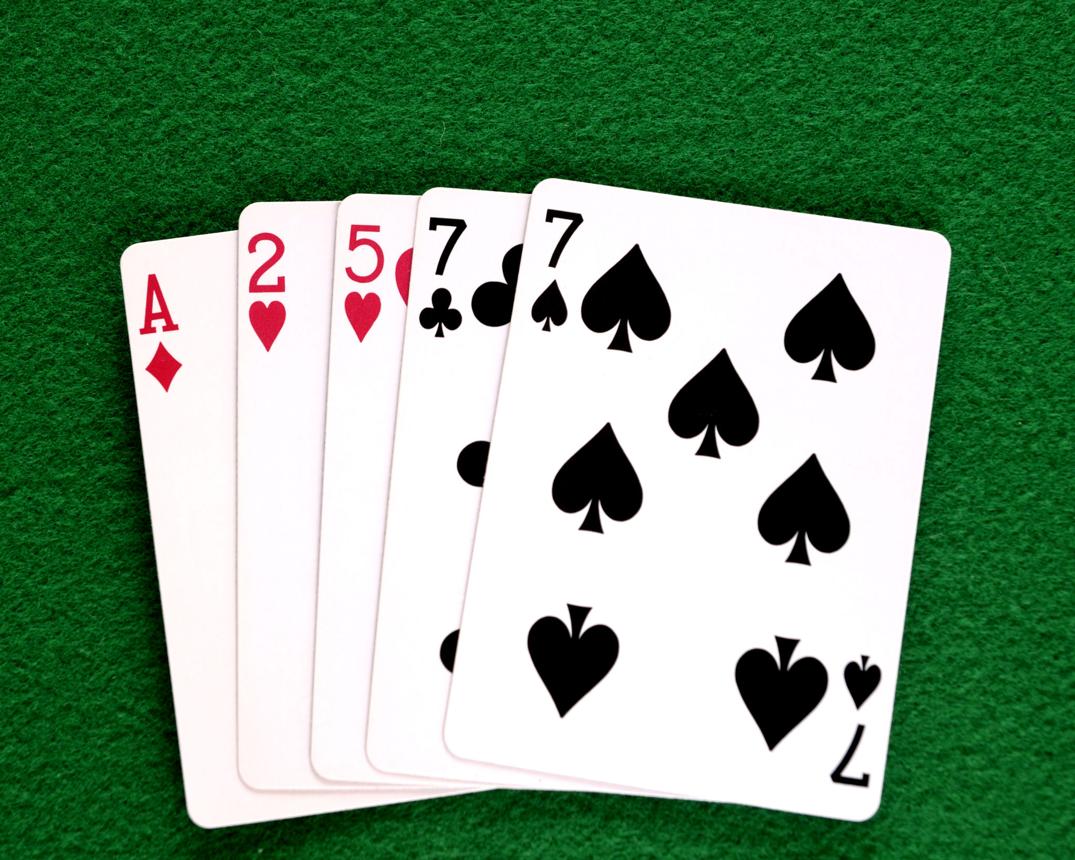
- One pair: Two cards of the same rank, plus three other cards.
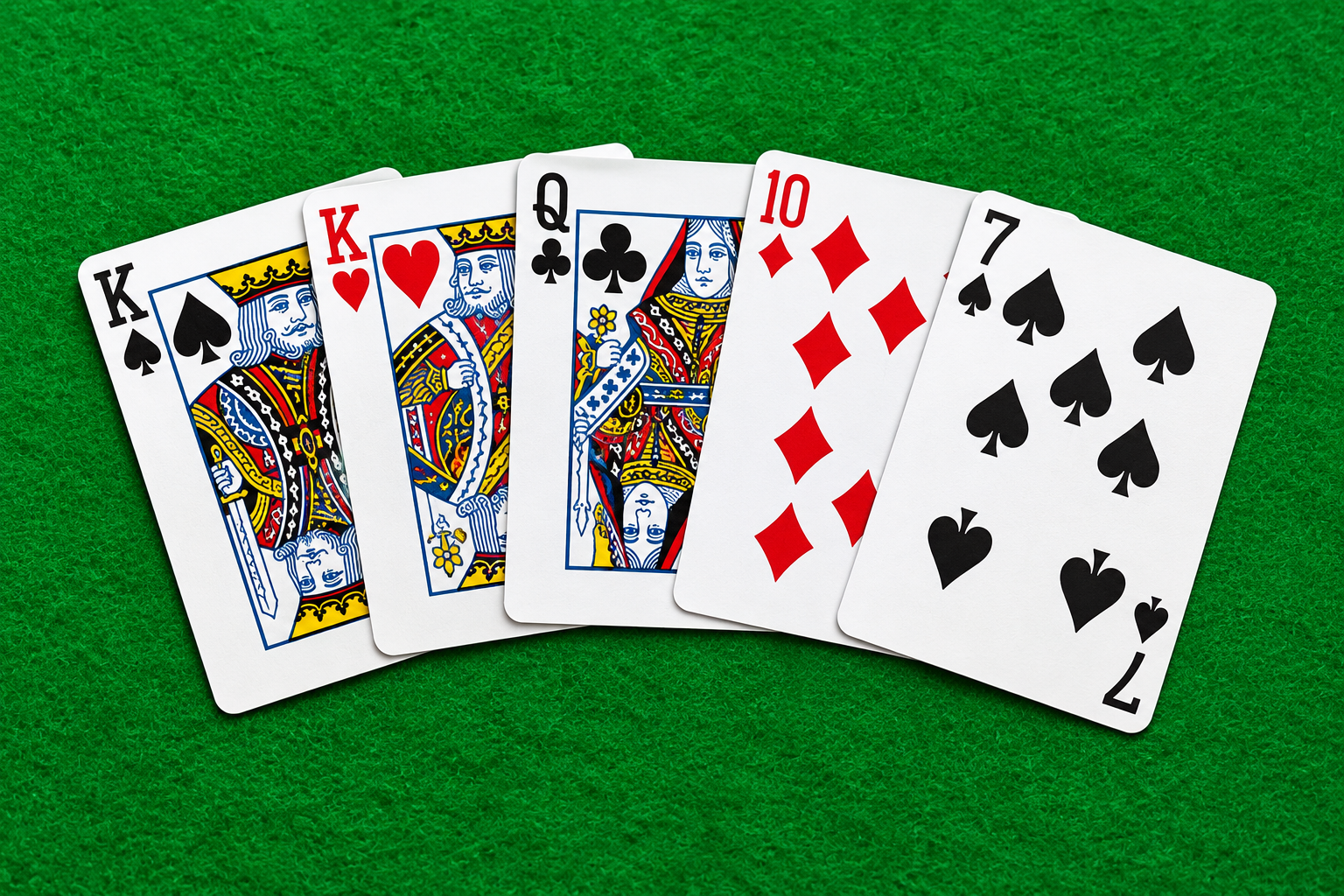
- High card: If no player has a pair or better, the highest card determines the hand, with the next-highest
cards used as needed.
How to Compare Hands
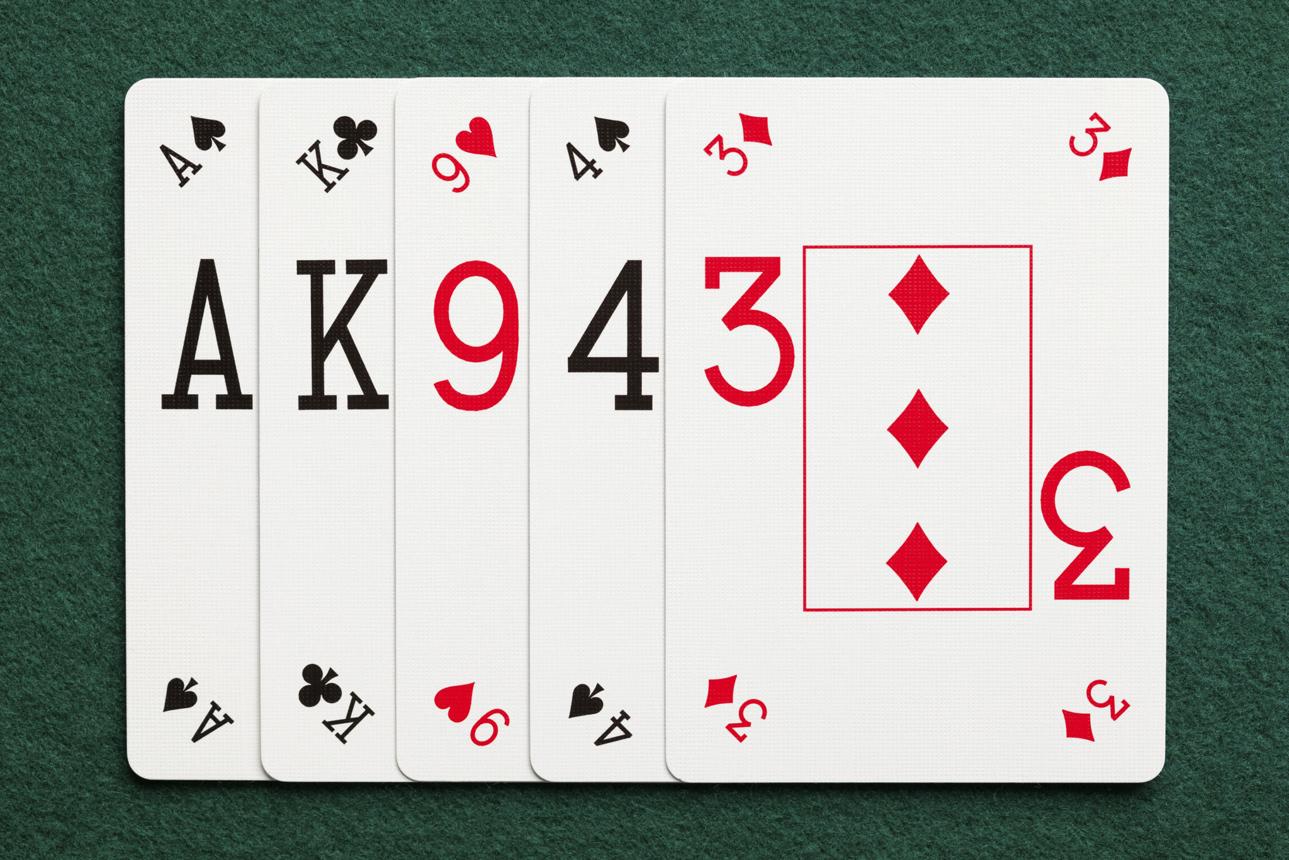
When players have the same type of hand, compare the cards that form it. A pair of kings beats a pair of queens. If both players have a pair of kings, compare the highest remaining card, then the next, and then the last.
With two pair, compare the higher pair first, then the lower pair, and finally the kicker. With a straight, the player whose straight has the highest card wins. In standard Texas Hold’em, suits do not rank above one another.
Remember the Best-Five-Card Rule
A player does not have to use both private cards. If the five community cards make a straight and nobody can make a better five-card hand, players may share the pot using the board.
What Happens When Players Tie?
If players have exactly the same best five-card hand, they split the pot equally. If the pot cannot be divided evenly into the smallest chip denomination, use a house rule agreed on before the game.
Keep a Reference Nearby
For a casual home game, a printed hand-ranking reference can help new players learn without slowing down the evening. When a dispute comes up, lay out the five cards being compared and work through the ranking calmly.
Bottom line: Learn the hand order, remember that only the best five cards count, and take your time comparing hands. These basics help everyone feel more comfortable at the table.